06 / 06
Molecular electrochemistry
How molecules gain and lose electrons, seen through current and light.
Many molecules take an electron and a proton together, and how they do it depends on the solvent, the ions around them and the space they are held in. We follow these reactions with current and with light, and use what we learn to design redox molecules for sensors and enzyme electrodes.
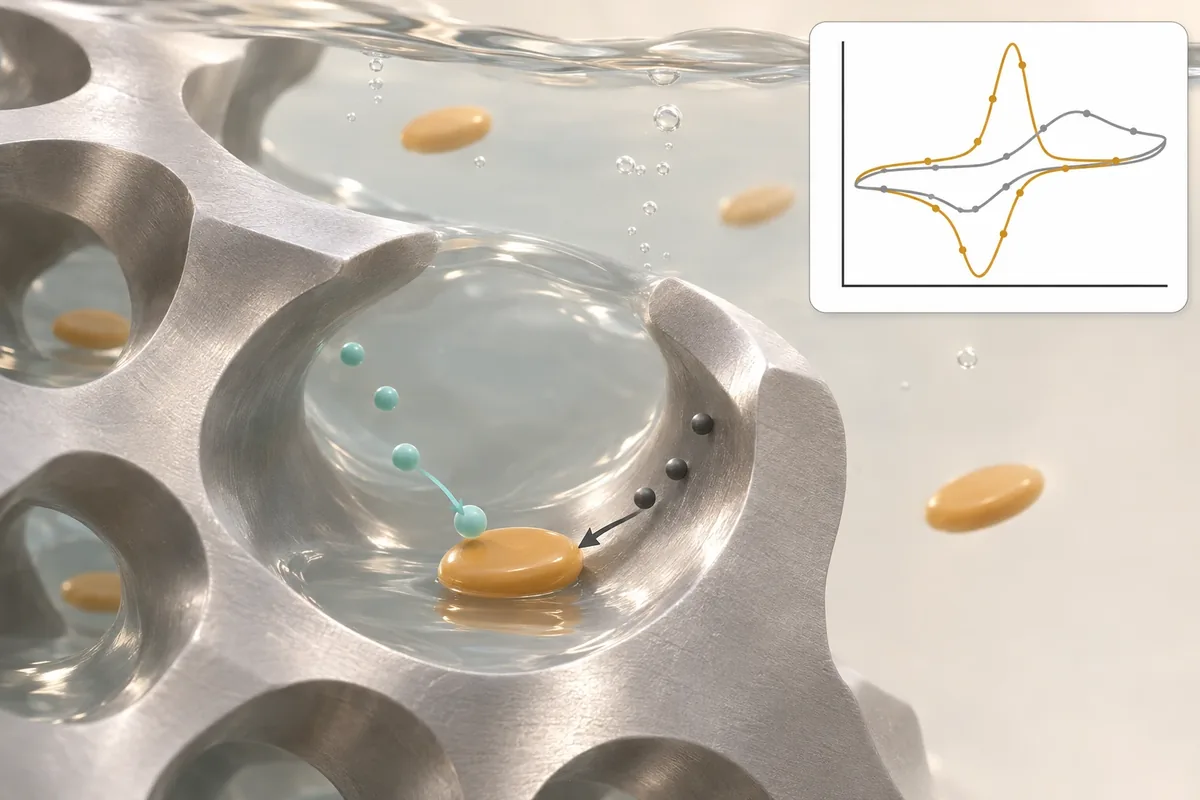
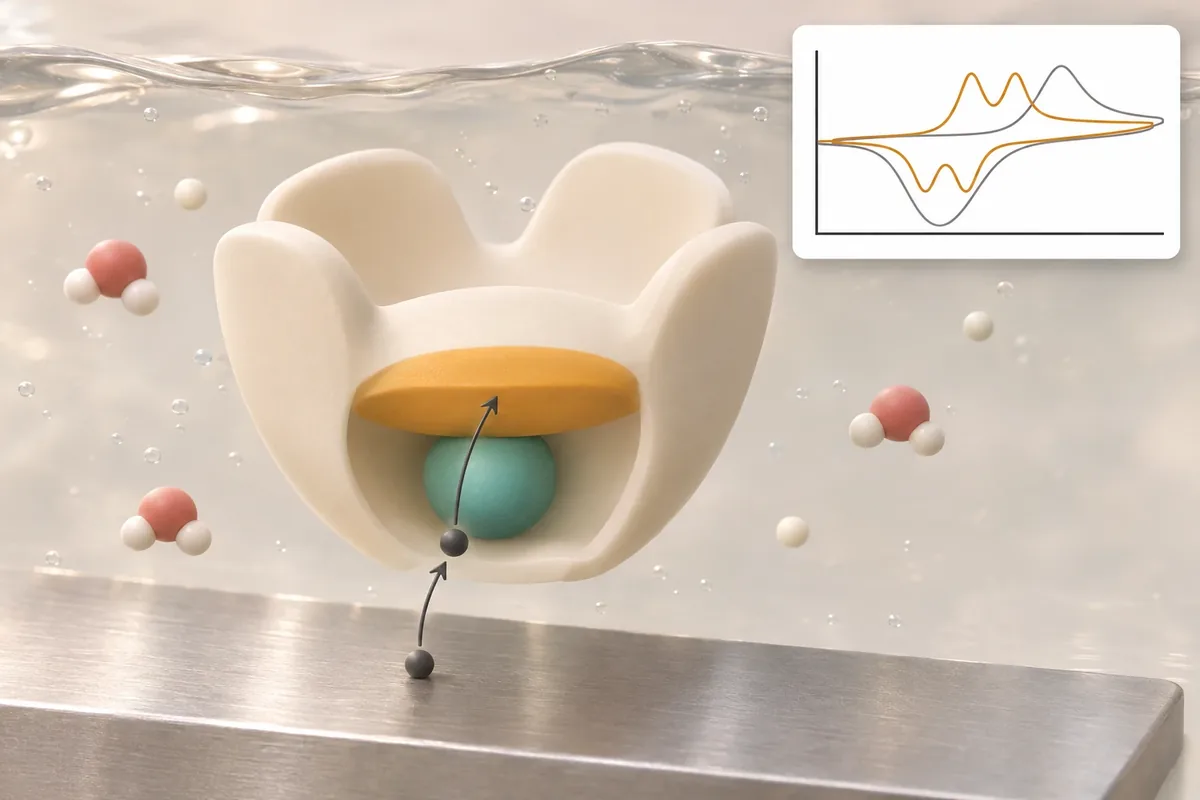
- Proton-coupled electron transfer: how protons, captured ions and confinement in nanoporous electrodes change the way quinones take and give electrons.
- Physical electrochemistry: mechanisms and kinetics of electron transfer in electroactive molecules and materials, read from voltammetry and impedance.
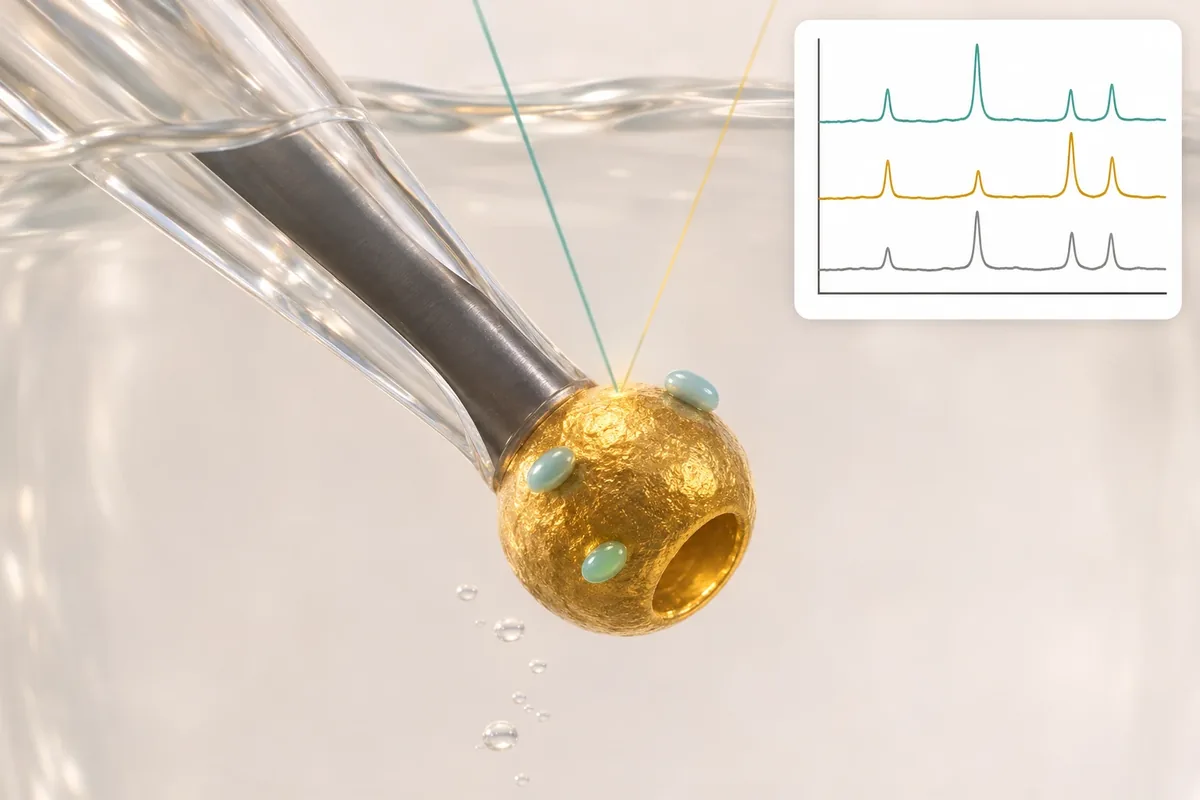
- Spectroelectrochemistry: watching a molecule change its absorption and Raman spectrum while the potential moves.
- Redox molecules by design: how structure sets the potential and stability of new mediators such as phenothiazine derivatives.
Selected papers
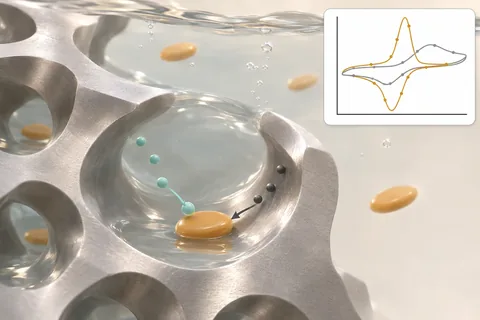 Bae, J. H.; Kim, Y.-R.; Kim, R. S.; Chung, T. D.* Enhanced electrochemical reactions of 1,4-benzoquinone at nanoporous electrodes. Phys. Chem. Chem. Phys. 2013, 15, 10645–10653. DOI: 10.1039/c3cp50175b
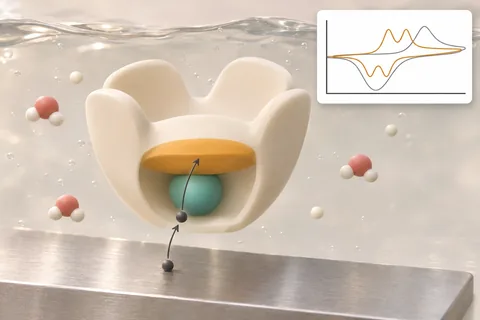 Kim, Y.-R.†; Kim, R. S.†; Kang, S. K.; Choi, M. G.; Kim, H. Y.; Cho, D.; Lee, J. Y.*; Chang, S.-K.*; Chung, T. D.* Modulation of quinone PCET reaction by Ca2+ ion captured by calix[4]quinone in water. J. Am. Chem. Soc. 2013, 135, 18957–18967. DOI: 10.1021/ja410406e
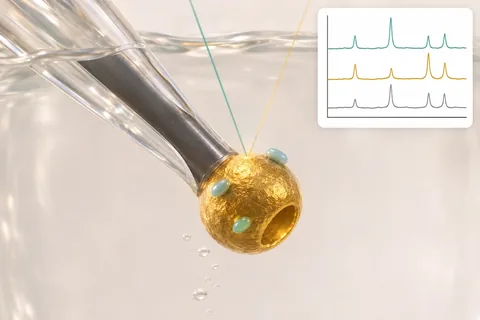 Kim, B. J.; Lee, D.-J.; Kim, Y.-R.; Lim, S. Y.; Bae, J. H.; Kim, K.-B.*; Chung, T. D.* Gold microshell tip for in situ electrochemical Raman spectroscopy. Adv. Mater. 2012, 24, 421–424. DOI: 10.1002/adma.201103644
Other themes
- 01Ion-selective electrodesElectrodes that pick one ion out of many, used to read nutrients in soil and hydroponic solutions.
- 02Nanoelectrochemistry and imagingReactions measured and mapped at the nanoscale with nanoelectrodes, scanning probes and nanopipettes, and features written with them.
- 03Mediated enzyme electrodesMediators that carry electrons from enzymes to electrodes, designed in the lab for glucose strips and microneedles.
- 04Electrodeposition and patterningFilms and patterns grown by current, cathodic or anodic, from the first nuclei to patterned electrodes.
- 05Electrochemical surface modificationMolecular layers grafted and grown on electrodes: aryldiazonium layers and electropolymerized films.
Join us
Graduate school
MS, PhD and integrated MS–PhD. Email Prof. Yang-Rae Kim with a short note on your background and the theme that interests you. Applications go through the Kwangwoon University Graduate School (grad.kw.ac.kr).
Subject: Graduate study
Undergraduate research
Tell us your major, year and interests. You start by making electrodes and measuring with them yourself.
Subject: Undergraduate research
International applicants: no degree positions at present. Researchers who want to collaborate are welcome: see Contact and Equipment.