04 / 06
Electrodeposition and patterning
Films and patterns grown by current, cathodic or anodic.
Every deposited film starts as a few atoms. Metal ions take electrons at the surface, or ions are oxidized into an oxide, form nuclei, and the nuclei grow and merge into grains and films. The potential, the solution and the substrate decide what grows, and where. We study those first steps and combine deposition with lithography to build patterned electrodes.
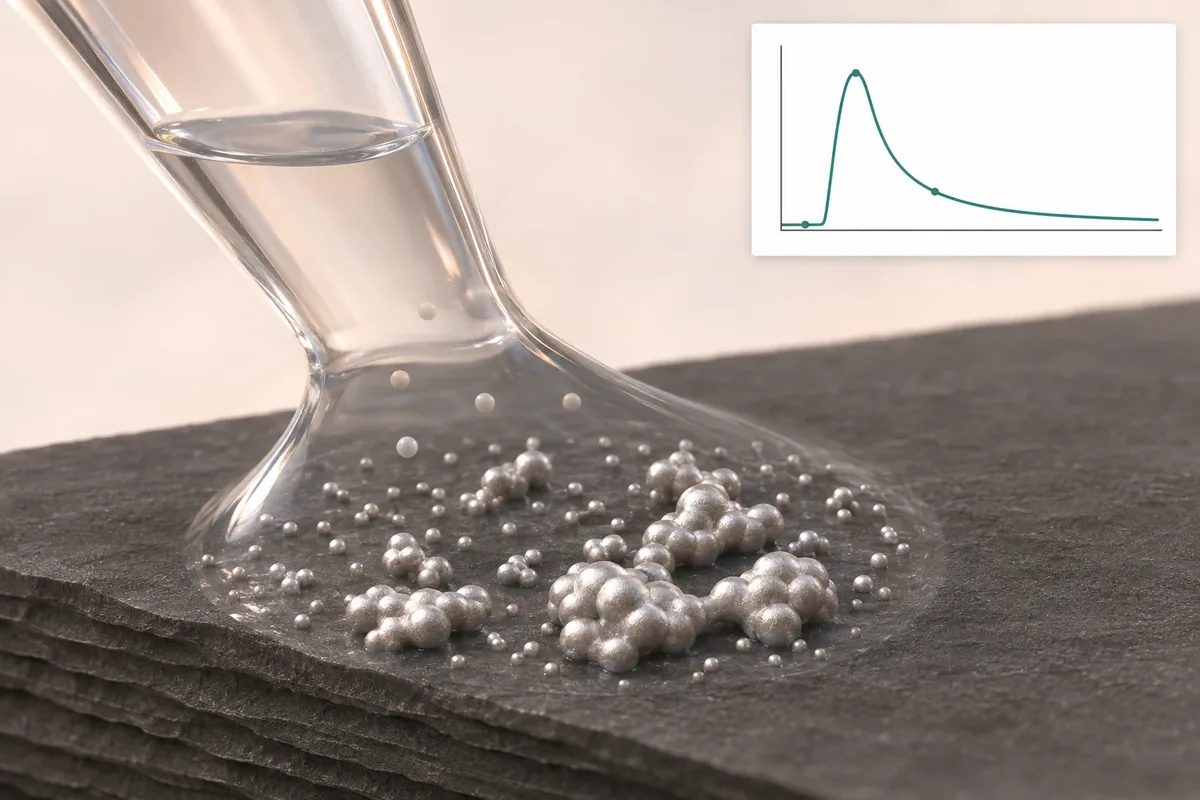
- Nucleation and growth. Following electrodeposition from its earliest stage in small meniscus cells, where nanoparticles a few nanometers across nucleate and then aggregate. This comes from the PI's postdoctoral work, and we plan to bring it to Kwangwoon with the imaging line.
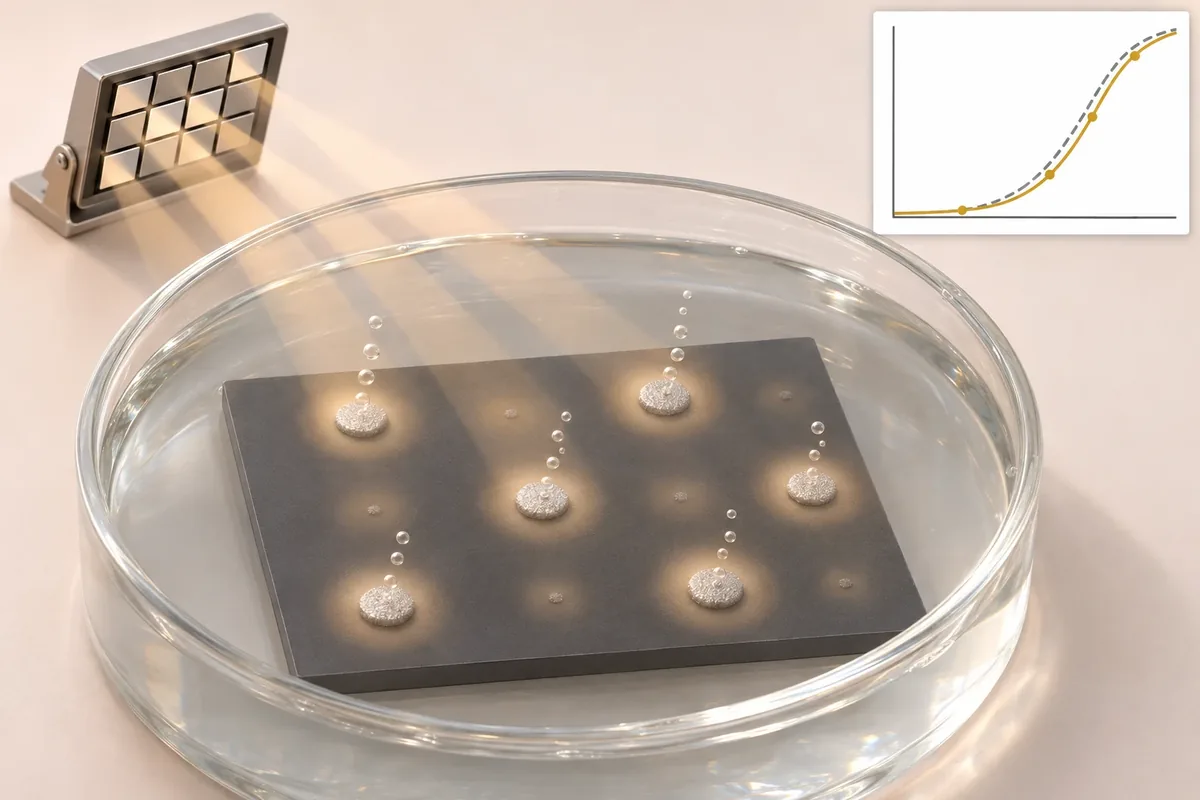
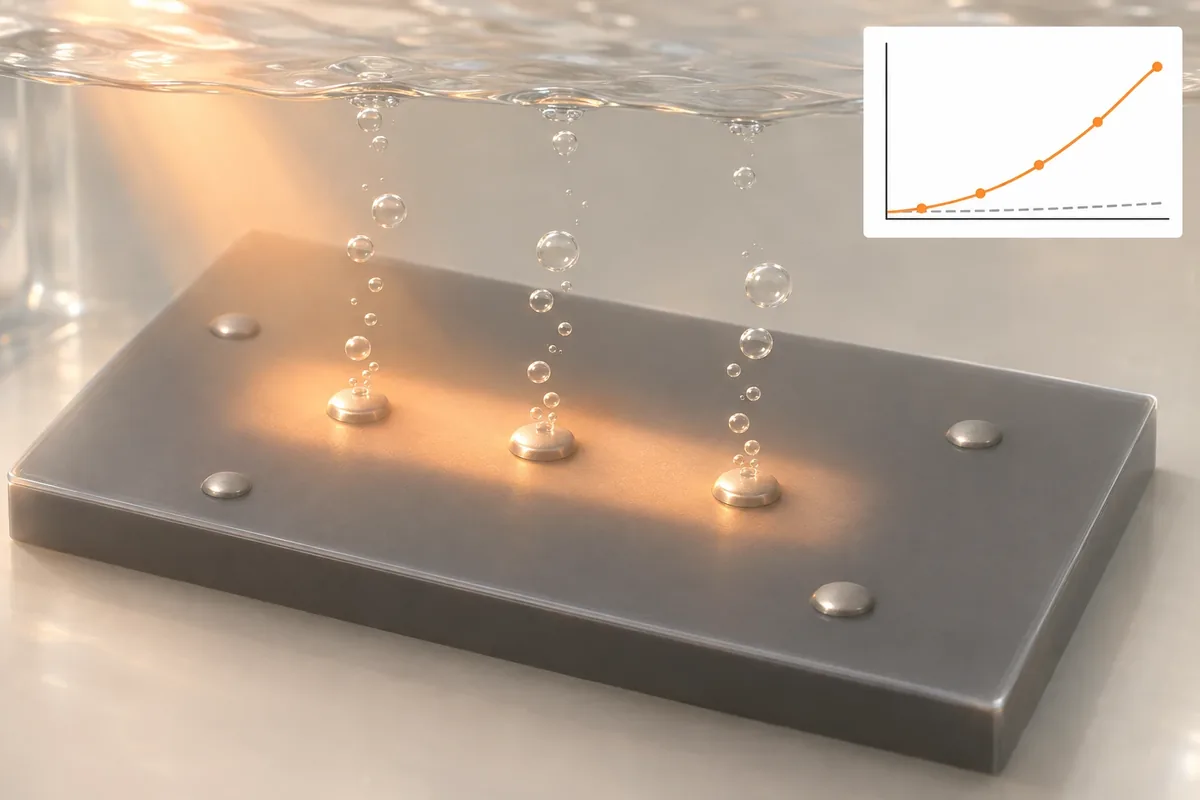
- Light-guided electrodeposition. On photoconductive amorphous silicon, light decides where metal deposits, so catalyst patterns can be written without a mask.
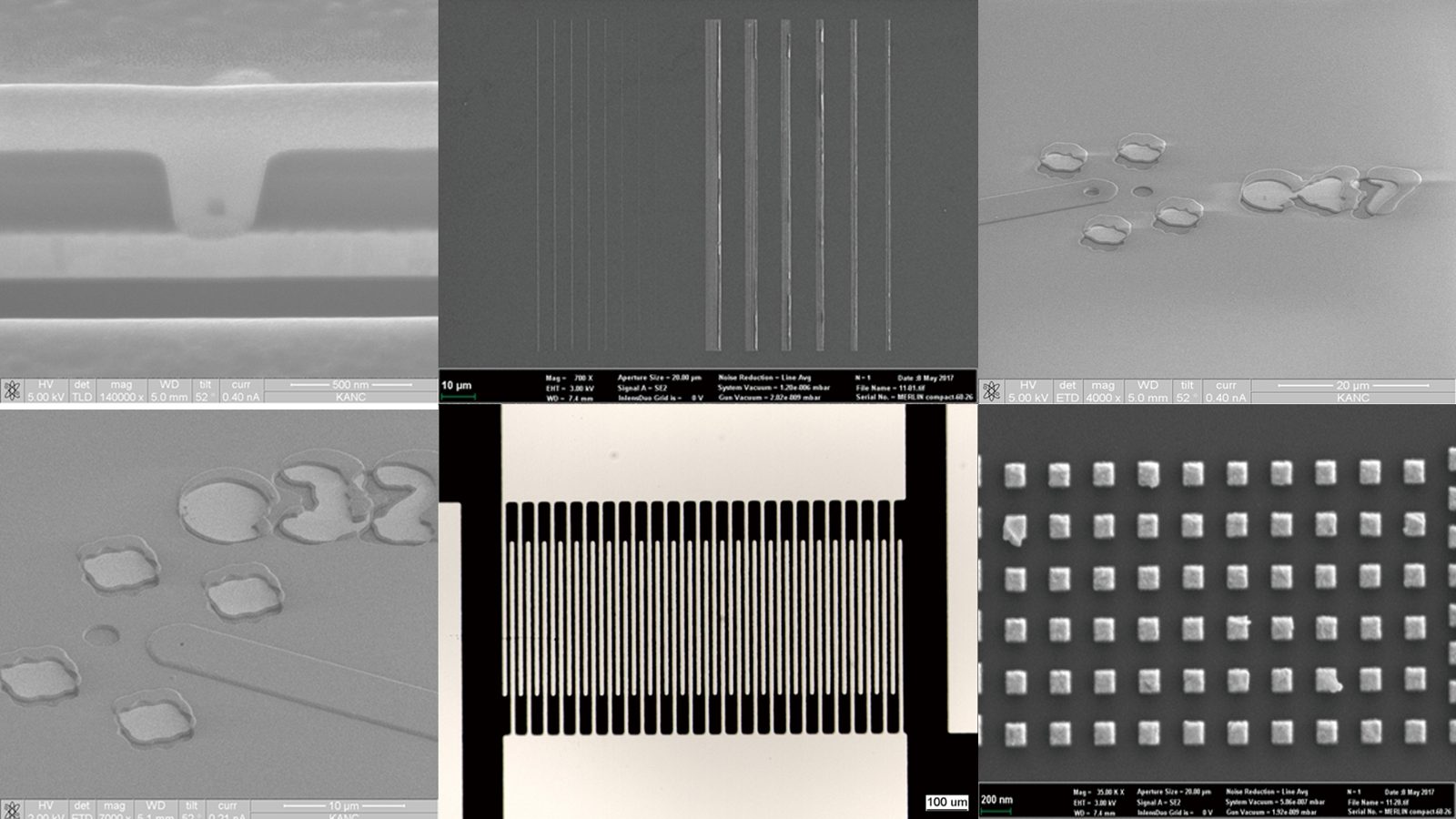
- Patterned electrodes. Top-down (e-beam lithography, photolithography, focused ion beam) and bottom-up (electrodeposition, nanosphere lithography) routes to electrodes with defined geometry, and electric-field-assisted substrates.
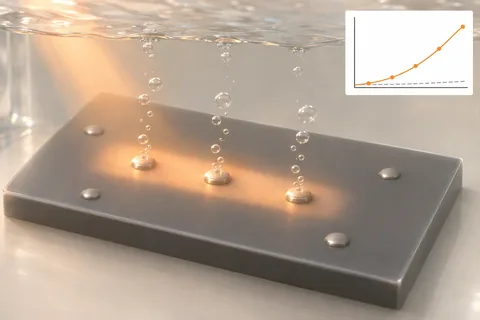
- Deposited catalysts and oxides. Metal and oxide layers grown by cathodic and anodic electrodeposition, for hydrogen and oxygen evolution and for manganese oxide pseudocapacitors.
- Writing with a tip. Pipette and probe based lithography and three-dimensional deposition belong to nanoelectrochemistry and imaging →
Selected papers
Including the PI's postdoctoral work.
 Lim, S. Y.; Han, D.; Kim, Y.-R.*; Chung, T. D.* Photoelectrochemical and impedance spectroscopic analysis of amorphous Si for light-guided electrodeposition and hydrogen evolution reaction. ACS Appl. Mater. Interfaces 2017, 9, 23698–23706. DOI: 10.1021/acsami.7b04961
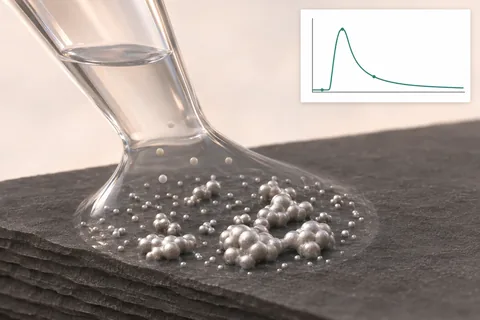 Kim, Y.-R.; Lai, S. C. S.; McKelvey, K.; Zhang, G.; Perry, D.; Miller, T. S.; Unwin, P. R.* Nucleation and aggregative growth of palladium nanoparticles on carbon electrodes. J. Phys. Chem. C 2015, 119, 17389–17397. DOI: 10.1021/acs.jpcc.5b03513
Other themes
- 01Ion-selective electrodesElectrodes that pick one ion out of many, used to read nutrients in soil and hydroponic solutions.
- 02Nanoelectrochemistry and imagingReactions measured and mapped at the nanoscale with nanoelectrodes, scanning probes and nanopipettes, and features written with them.
- 03Mediated enzyme electrodesMediators that carry electrons from enzymes to electrodes, designed in the lab for glucose strips and microneedles.
- 05Electrochemical surface modificationMolecular layers grafted and grown on electrodes: aryldiazonium layers and electropolymerized films.
- 06Molecular electrochemistryHow molecules gain and lose electrons, seen through current and light: mechanisms, proton-coupled electron transfer and spectroelectrochemistry.
Join us
Graduate school
MS, PhD and integrated MS–PhD. Email Prof. Yang-Rae Kim with a short note on your background and the theme that interests you. Applications go through the Kwangwoon University Graduate School (grad.kw.ac.kr).
Subject: Graduate study
Undergraduate research
Tell us your major, year and interests. You start by making electrodes and measuring with them yourself.
Subject: Undergraduate research
International applicants: no degree positions at present. Researchers who want to collaborate are welcome: see Contact and Equipment.