Kwangwoon University
Electrochemistry
at the interface
Ion-selective electrodes, nanoelectrochemistry and imaging, mediated enzyme electrodes, electrodeposition and patterning, surface modification and molecular electrochemistry. Six ways charge crosses one interface, and the students who learn to control them.
We welcome MS, PhD and undergraduate researchers. How to join →One electrode, one solution.
Hover over a region, click to enter.One electrode, one solution. Tap a region to enter.
- 01Ion-selective electrodesElectrodes that pick one ion out of many
An ion-selective electrode answers to one ion and ignores the rest. We make electrodes that read nutrient ions in soil and hydroponic solutions, where crops grow.
- 02Nanoelectrochemistry and imagingReactions measured and mapped at the nanoscale
The current of a whole electrode is an average. Nanoelectrodes, scanning probes and nanopipettes measure one spot at a time and map where the reaction actually happens: a nanoparticle, a step edge, a defect.
- 03Mediated enzyme electrodesMediators that carry electrons from enzymes to electrodes
An enzyme takes electrons from glucose, and a small redox molecule carries them to the electrode. We design those mediators and the enzyme electrodes built on them.
- 04Electrodeposition and patterningFilms and patterns grown by current, cathodic or anodic
Current turns ions into metal and oxide films, by reduction or by oxidation. We study how the first nuclei form and use deposition and lithography to make patterned electrodes.
- 05Electrochemical surface modificationMolecular layers grafted and grown on electrodes
Aryldiazonium layers grafted onto the electrode and polymers grown from it. We control how thick and how dense these layers become.
- 06Molecular electrochemistryHow molecules gain and lose electrons, seen through current and light
Reaction mechanisms, proton-coupled electron transfer and spectroelectrochemistry: we follow molecules as they take and give electrons, and design redox molecules from what we learn.
News
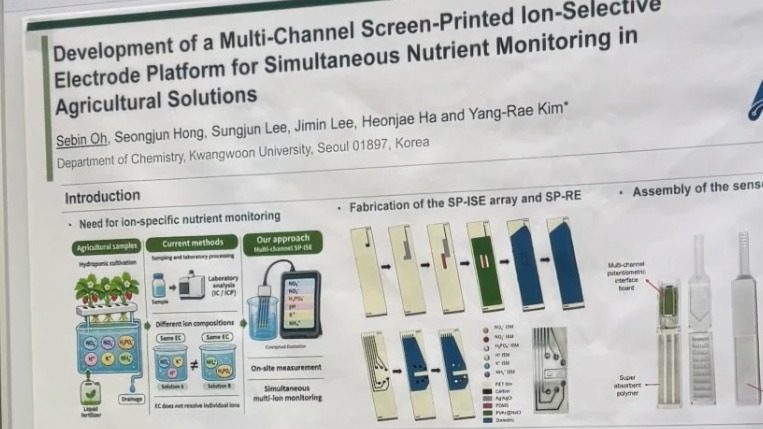
Se Bin and Jiyeon presented two posters on multichannel screen-printed ion-selective electrode platforms for agricultural solutions at the fall meeting of the Korean Society for Horticultural Science.
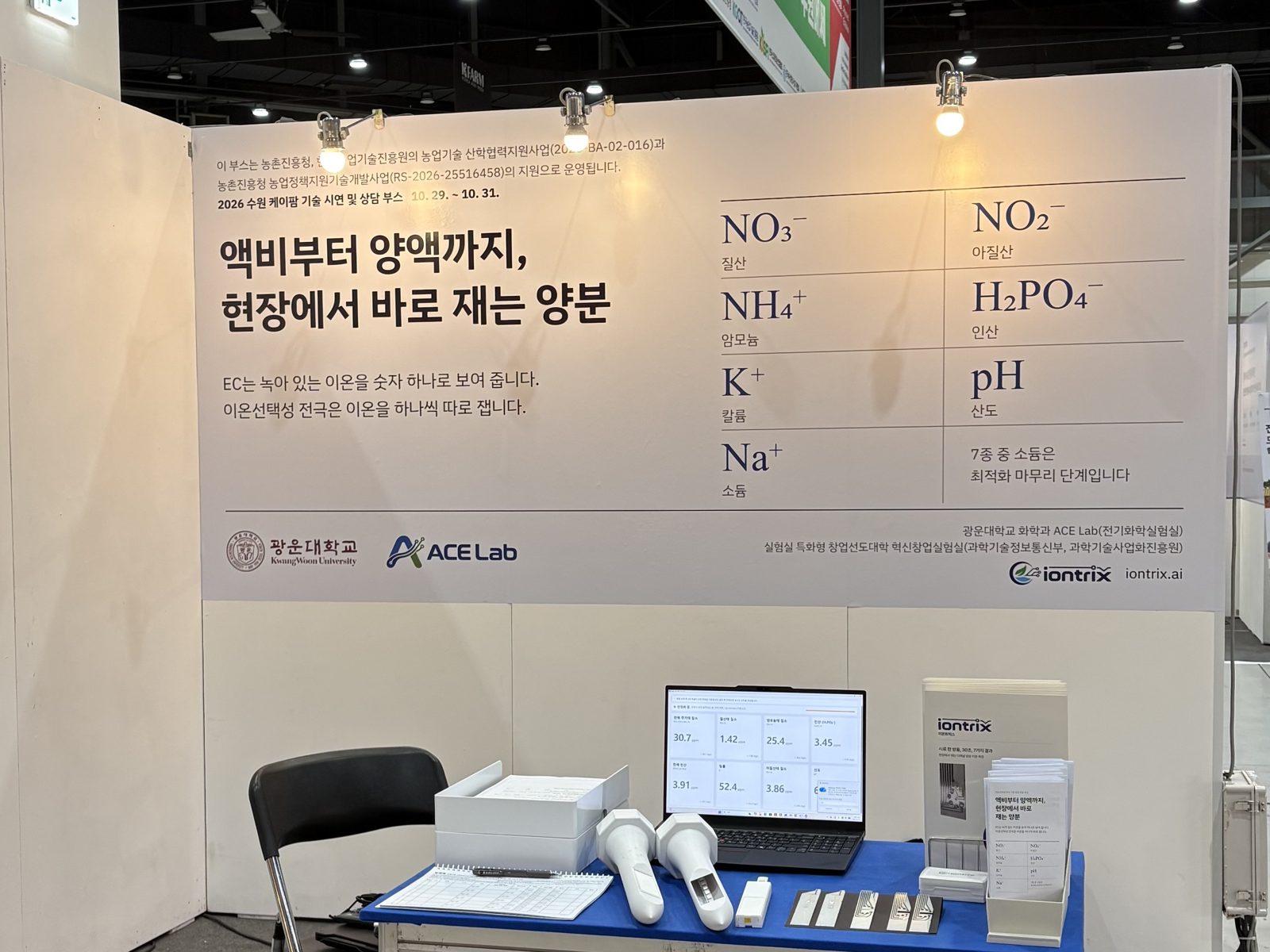
We demonstrated our multichannel ion-selective electrodes, reading nutrient ions from liquid manure to hydroponic solutions, at the Kwangwoon University booth at K-FARM 2026, an agricultural expo in Suwon, from 29 to 31 October.
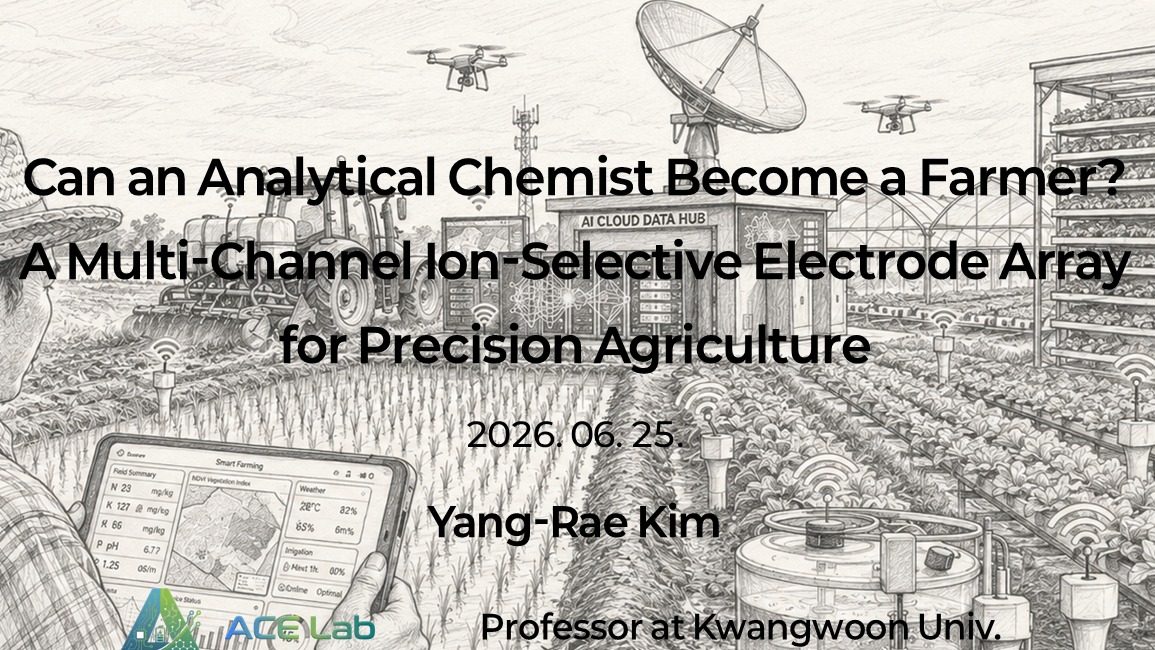
Prof. Kim gave a talk, "Can an Analytical Chemist Become a Farmer? A Multi-Channel ISE Array for Precision Agriculture", at the 2026 Joint Summer Symposium of the Analytical Chemistry and Electrochemistry Divisions of the Korean Chemical Society.
Six kinds of electrochemistry
- 01Ion-selective electrodesElectrodes that pick one ion out of many, used to read nutrients in soil and hydroponic solutions.
- 02Nanoelectrochemistry and imagingReactions measured and mapped at the nanoscale with nanoelectrodes, scanning probes and nanopipettes, and features written with them.
- 03Mediated enzyme electrodesMediators that carry electrons from enzymes to electrodes, designed in the lab for glucose strips and microneedles.
- 04Electrodeposition and patterningFilms and patterns grown by current, cathodic or anodic, from the first nuclei to patterned electrodes.
- 05Electrochemical surface modificationMolecular layers grafted and grown on electrodes: aryldiazonium layers and electropolymerized films.
- 06Molecular electrochemistryHow molecules gain and lose electrons, seen through current and light: mechanisms, proton-coupled electron transfer and spectroelectrochemistry.
ACE stands for AI-Converged Electrochemistry: we bring data-driven methods into everyday electrochemical work. Data-driven tools run across the themes: Bayesian optimization to choose the next electrografting condition from the results so far, and scripted equivalent-circuit fitting of impedance spectra.
What you will learn to do
Four things you learn here, from making an electrode to presenting what it measured.
Make an electrode
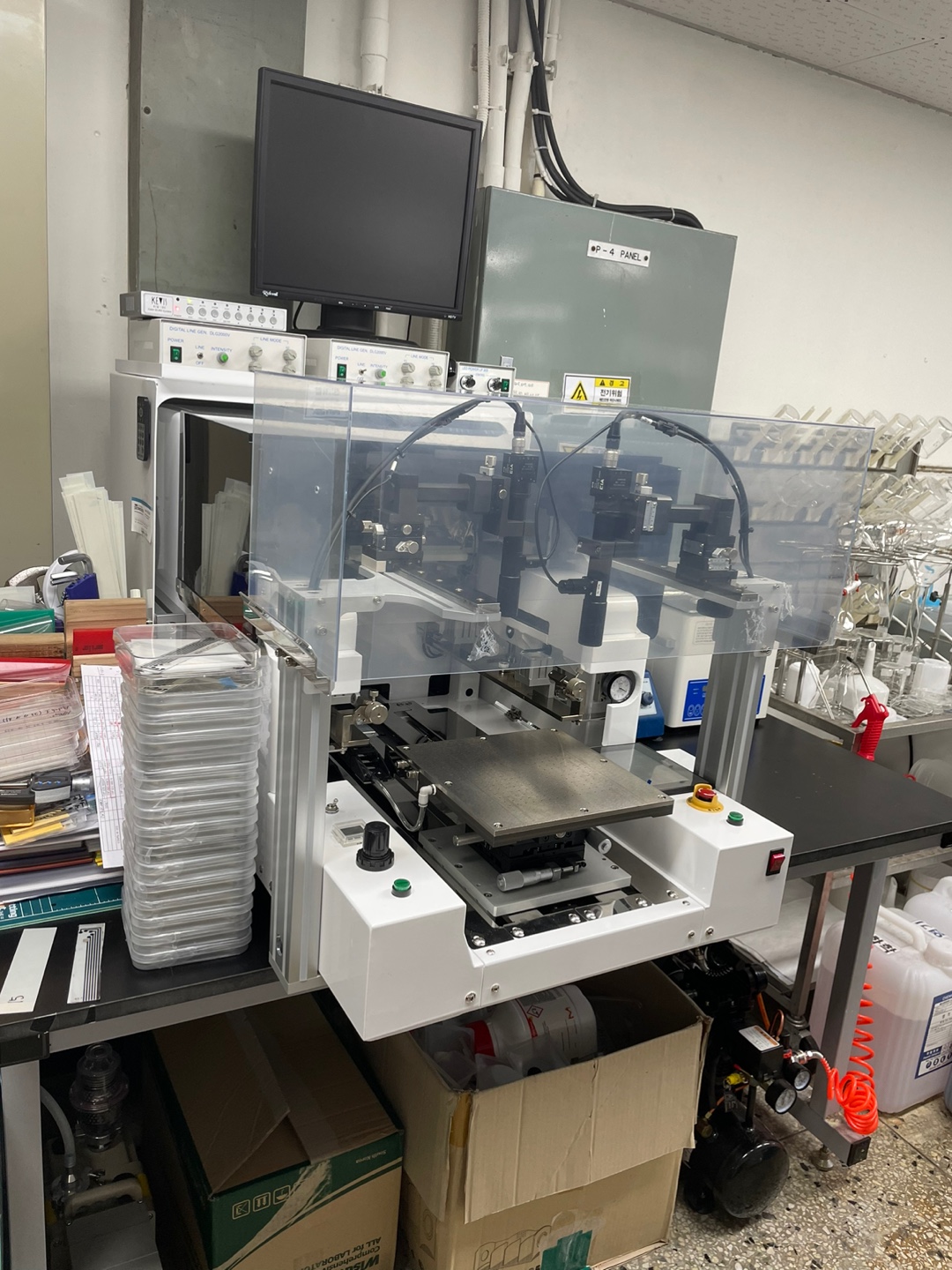
Screen-print carbon electrodes, and modify HOPG and glassy carbon electrodes by electrografting, bonding a molecular layer to the surface with a current.
Measure it
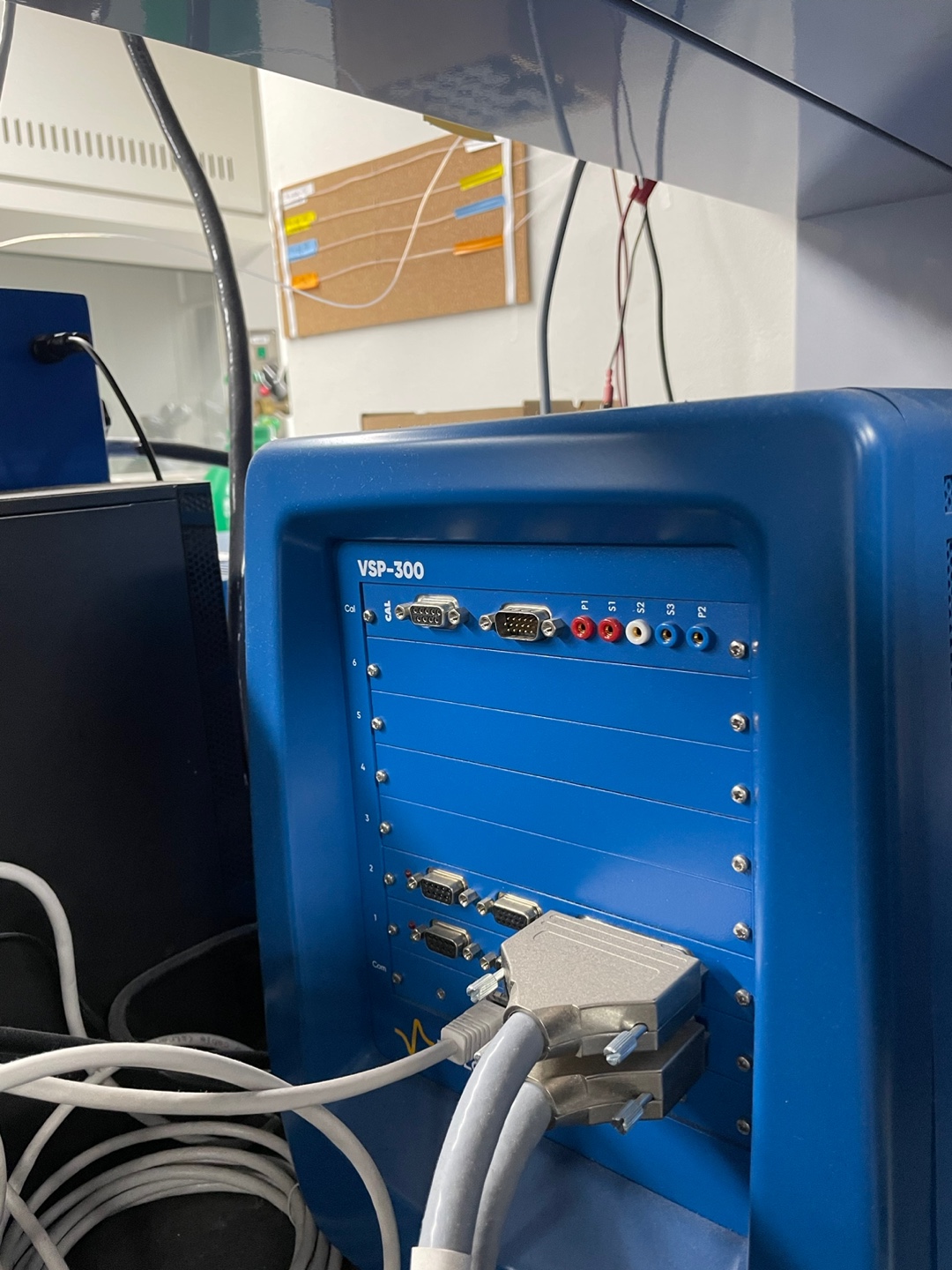
Cyclic voltammetry, impedance spectroscopy and potentiometry on electrochemical workstations with low-current amplifiers.
Look at it
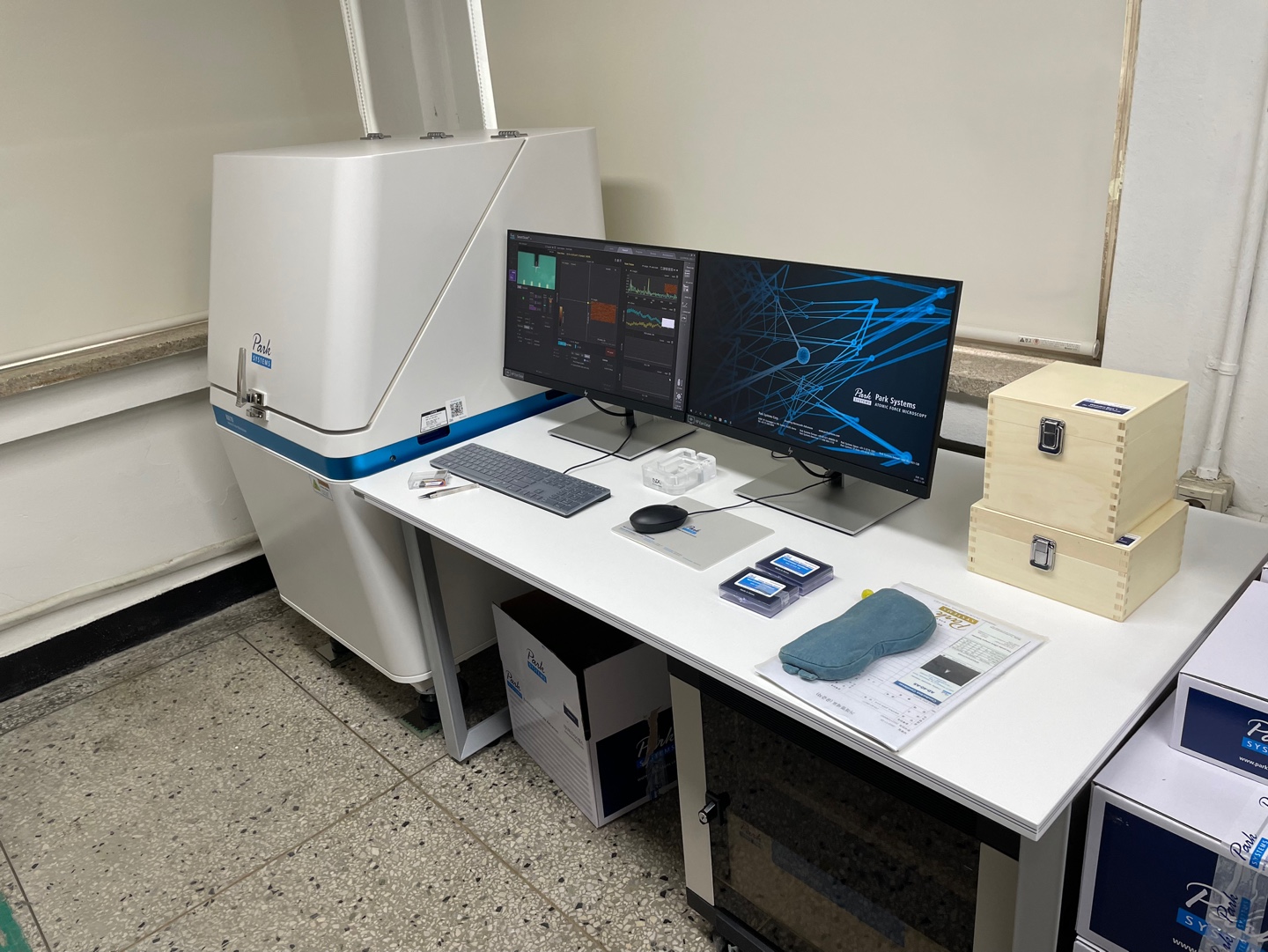
Scan surfaces with SICM and SECCM on our atomic force microscope (NX-10, explained on the imaging page), and help build our own electrochemical imaging system around a piezo stage we already have, writing the instrument control in LabVIEW.
Present it
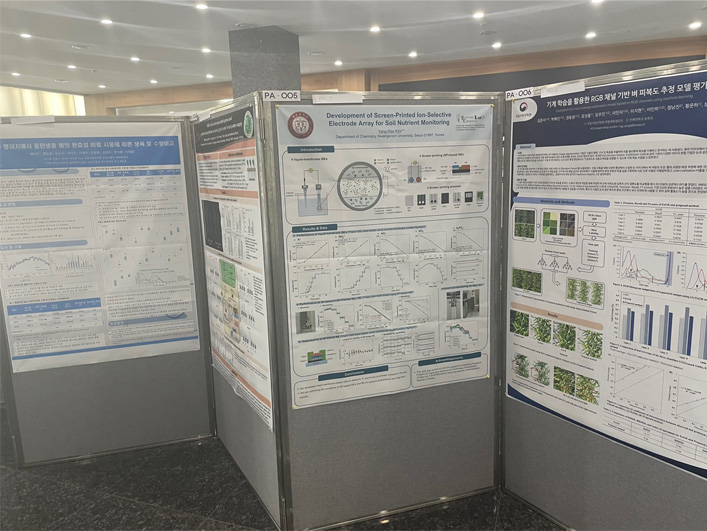
Analyze your data, then present the results as posters and talks at domestic and international conferences.
Who will make the next measurement?
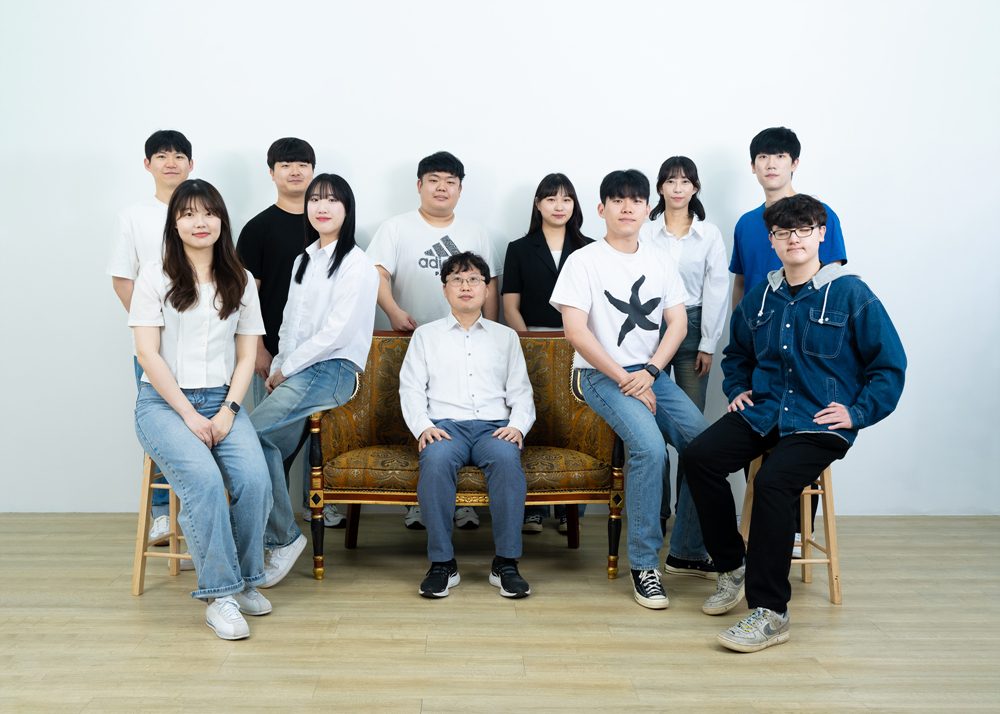
You do not need an electrochemistry background. We welcome students from other majors: programming, circuits, materials, life sciences.
Current priorities
- Ion-selective electrodes for new applications (ion-selective electrode theme)
- Building our own electrochemical imaging system for SECM, SICM and SECCM, with instrument control in LabVIEW and field-programmable gate array (FPGA) hardware (imaging theme)
- Fundamental electrochemistry at lithographically patterned electrodes (electrodeposition theme)
- Organic synthesis for developing and applying electrochemical systems: redox mediators, electroactive monomers and other molecules made in the lab (molecular electrochemistry theme)
Graduate school
MS, PhD and integrated MS–PhD. Email Prof. Yang-Rae Kim with a short note on your background and the theme that interests you. Applications go through the Kwangwoon University Graduate School (grad.kw.ac.kr).
Subject: Graduate study
Undergraduate research
Tell us your major, year and interests. You start by making electrodes and measuring with them yourself.
Subject: Undergraduate research
International applicants: no degree positions at present. Researchers who want to collaborate are welcome: see Contact and Equipment.