Research
Everything we do happens at one place: the interface where an electrode meets a solution. Ions are selected there, reactions are mapped there, electrons from enzymes arrive there through mediators, metals and patterns grow there, molecular layers are built there, and molecules trade electrons and protons with it.
The work draws on electrochemistry, materials science, nanofabrication, analytical chemistry and nanochemistry.
Six themes
- 01Ion-selective electrodesElectrodes that pick one ion out of many, used to read nutrients in soil and hydroponic solutions.
- 02Nanoelectrochemistry and imagingReactions measured and mapped at the nanoscale with nanoelectrodes, scanning probes and nanopipettes, and features written with them.
- 03Mediated enzyme electrodesMediators that carry electrons from enzymes to electrodes, designed in the lab for glucose strips and microneedles.
- 04Electrodeposition and patterningFilms and patterns grown by current, cathodic or anodic, from the first nuclei to patterned electrodes.
- 05Electrochemical surface modificationMolecular layers grafted and grown on electrodes: aryldiazonium layers and electropolymerized films.
- 06Molecular electrochemistryHow molecules gain and lose electrons, seen through current and light: mechanisms, proton-coupled electron transfer and spectroelectrochemistry.
ACE stands for AI-Converged Electrochemistry: we bring data-driven methods into everyday electrochemical work. Data-driven tools run across the themes: Bayesian optimization to choose the next electrografting condition from the results so far, and scripted equivalent-circuit fitting of impedance spectra.
Tools we build
We write the analysis software we use every day, with AI coding assistants, and test each tool on problems with known answers before members rely on it. The tools are for lab members; the pictures show example data.
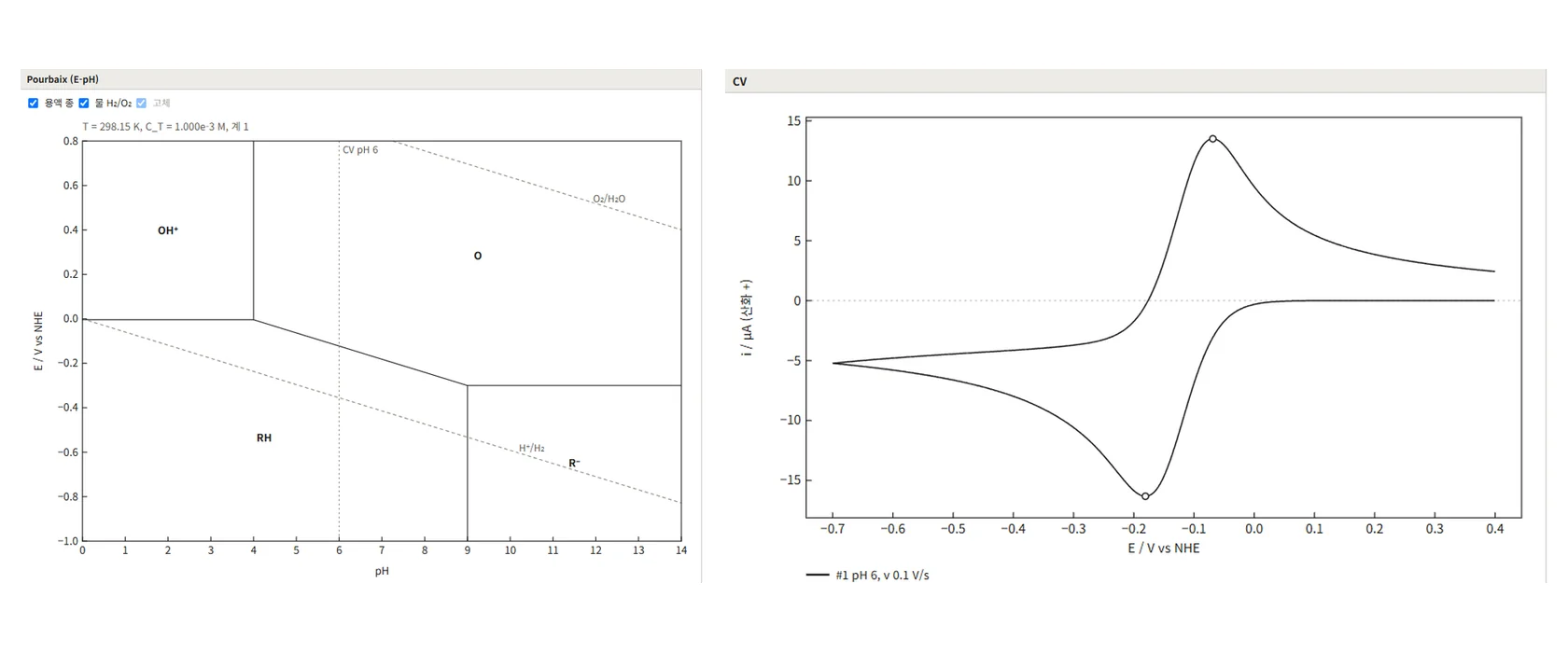
Reaction design
Write the reactions of a redox system, proton transfers included. From that one table the tool draws the Pourbaix diagram, simulates cyclic voltammograms and fits measured ones across scan rates.
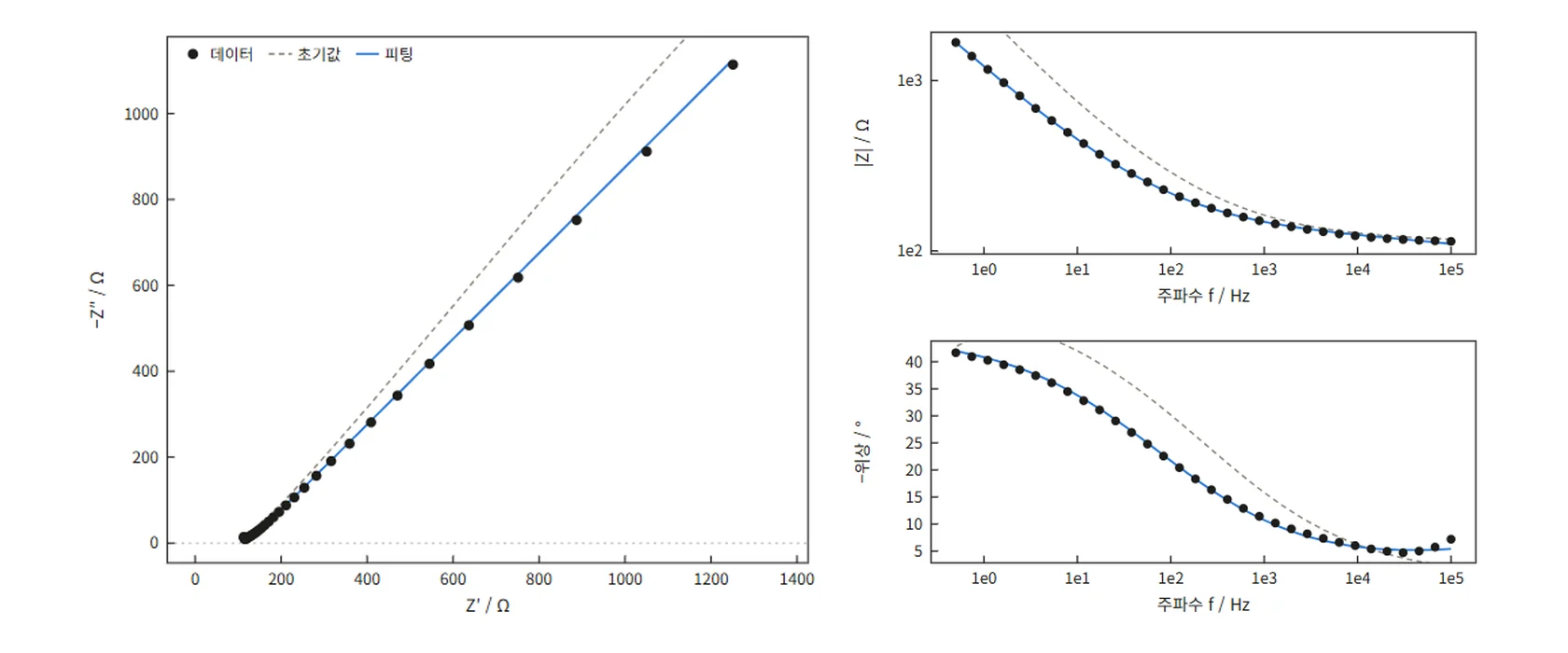
EIS Fit Studio
Fits impedance spectra to equivalent circuits, checks the data first (Kramers–Kronig, Z-HIT, distribution of relaxation times) and reports an uncertainty for every parameter. A separate Python version is checked against it on shared test data.
Join us
Graduate school
MS, PhD and integrated MS–PhD. Email Prof. Yang-Rae Kim with a short note on your background and the theme that interests you. Applications go through the Kwangwoon University Graduate School (grad.kw.ac.kr).
Subject: Graduate study
Undergraduate research
Tell us your major, year and interests. You start by making electrodes and measuring with them yourself.
Subject: Undergraduate research
International applicants: no degree positions at present. Researchers who want to collaborate are welcome: see Contact and Equipment.